
Charte personne vivant au Canada des droits et libertés
Éditeur : Gouvernement du Canada > Ministère de la Justice
Sujets : Législation de conformité
Année de publication : 1982
Type de ressource : Site web
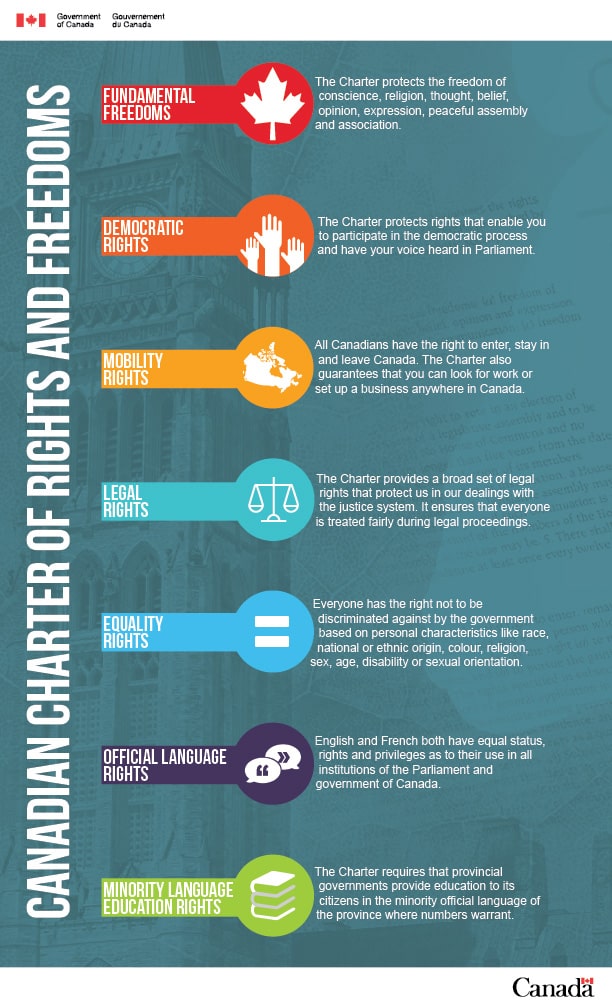
Le Charte canadienne des droits et libertés La Charte canadienne des droits et libertés protège les droits et libertés fondamentaux essentiels au maintien du Canada comme société libre et démocratique. Elle garantit que le gouvernement, ou toute personne agissant en son nom, ne peut ni restreindre ni porter atteinte à ces droits et libertés de façon abusive. Elle constitue un puissant vecteur de progrès, de protection, de compassion et d’équité, et a le pouvoir d’influencer notre société par l’interprétation des lois et des politiques.
Susan Eldridge, John Warren et Linda Warren sont nés sourds. Ils préféraient communiquer en langue des signes. Bien que la loi provinciale prévoie un financement pour les services médicalement nécessaires, aucun financement n'était disponible pour les interprètes en langue des signes. Ils ont fait valoir que cela portait atteinte à leurs droits à l'égalité.
La Charte a façonné notre passé et façonnera aussi notre avenir. Depuis 1982, elle est un élément essentiel de la démocratie canadienne et continuera de contribuer à forger notre identité nationale. La Charte affirme que le Canada est un pays multiculturel et qu’elle doit toujours être lue et comprise dans cette perspective. Elle protège également les droits des personne autochtones du Canada (Premières Nations, Inuits et Métis). L’article 35 de la Constitution, distinct de la Charte, reconnaît et affirme les peuples autochtones et leurs droits issus des traités.
Exemple de la manière dont la Charte canadienne des droits et libertés a été utilisée pour garantir l'égalité des personne handicapées :
“La Cour suprême a confirmé ce point, concluant que leurs droits à l'égalité avaient été bafoués car ils s'étaient vu refuser l'accès aux soins médicaux en raison de leur handicap. Sans interprètes en langue des signes, les personne sourdes ne pourraient pas communiquer efficacement avec leurs médecins, ce qui accroît le risque d'erreurs de diagnostic et de traitements inefficaces.
Cette affaire démontre que l’égalité ne signifie pas nécessairement un traitement identique pour tous. Dans certains cas, les groupes défavorisés peuvent avoir besoin de davantage de services ou de programmes. Les gouvernements, les employeurs et les fournisseurs de services doivent tenir compte de la nécessité d’éliminer les obstacles afin de permettre la pleine participation des personnes handicapées à la société personne vivant au Canada .
Pour en savoir plus sur cette affaire, cliquez ici : Eldridge c. Colombie-Britannique (Procureur général), [1997] 3 RCS 624."”
Accédez à la Charte ici : Charte canadienne des droits et libertés.