
CASE Member Spotlight – Summer Street Society
CASE Member Spotlight
Summer Street Society
The Canadian Association for Supported Employment (CASE) is committed to facilitating inclusive employment in Canada for persons experiencing disability and who may have intersecting identities. Our work is guided by our values and the guiding principles of supported employment. This work also involves learning and promoting best practices in Canada and across the world with the shared goal of advancing supported employment.
Kateryna Zmytrovych, CASE Member Experience Coordinator, spoke with Bob Bennett, Executive Director at The Summer Street Society.
What is your organization's mission, and what impact are you working to create in your community?
Bob: The Summer Street Society is in New Glasgow, Nova Scotia, and we’ve been around since 1968. Our mission is to create opportunities with people with diverse abilities based on their interests, with the goal of benefiting both the individual and the broader community. We use the term “diverse abilities” because that’s the language the people who receive services from us have asked us to use.
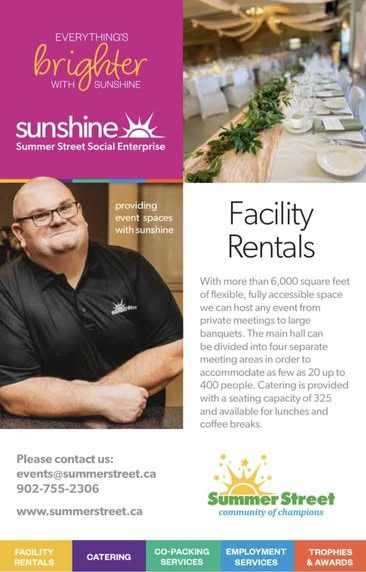
I’ve been with the organization for 40 years, and I genuinely love working here. Early on, I realized that creating meaningful inclusion required more than employment supports alone. We invested in infrastructure that would create opportunities for people with diverse abilities and the broader community to come together naturally. That led to the development of what became the largest fully accessible banquet facility in the area.
“People would come for weddings, banquets, and community events and interact with people with diverse abilities, often in ways they hadn’t before. Those everyday interactions helped break down barriers and build connections, and that became an important part of our story and our approach.”
Today, we run a number of social enterprises and employ a significant number of people. There are about 70 people working within the organization, and approximately 65% of them have diverse abilities. Alongside our employment programs, we support another group of people through programs and services that provide an important space for connection, participation, and belonging.
My vision is for a fully inclusive society. I would love to reach a point where we don’t need terms like diverse abilities because everyone is simply accepted for who they are. We’ve made a great deal of progress compared to 40 years ago, but we’re not there yet. There are still many economic and systemic pressures that create barriers to inclusion.
What is a success story or a memorable moment that continues to stay with you and remind you why this work matters?
Bob: One of the stories relates to how our organization serves as the crisis centre for the county. Because we operate a fully accessible facility with backup generators, when a major storm hits and people have been isolated for days without power, they can come here to charge their phones, have a bowl of soup and a sandwich, reconnect with neighbours, and find support.
What always stands out to me is seeing someone with a diverse ability serving coffee or tea to people who are suddenly vulnerable themselves. In those moments, people often begin to see that person in a completely different light. They are no longer being helped; they are the ones extending a helping hand. We’ve been doing that for years, and it has many benefits that go far beyond the immediate crisis.
Another example is our hydroponic food-growing initiative, which came directly from our participants. About seven years ago, they told us they wanted three things: to grow food they could eat, to grow food that could be sold so they could earn a fair wage, and to grow food that could be donated to people who were hungry. Our role was to help make that vision a reality.
“Today, the initiative has grown into one of the largest solar-supported hydroponic growing operations in Canada. What makes me especially proud is the role participants play in shaping our organization.”
Participants are employed as growers and take pride in knowing the fresh produce they grow supports both local consumers and people experiencing food insecurity in their community.
Each year, a participant council of about 40 people meets directly with our Board of Directors and evaluates how well we are doing on approximately 80 different measures. Twenty years ago, we received mostly red ratings.
Today, we consistently see about 90% satisfaction. That direct connection between the people receiving services and the highest level of governance helps keep us accountable and focused on what matters most to them. It is one of the reasons I believe we have become a stronger organization over time.
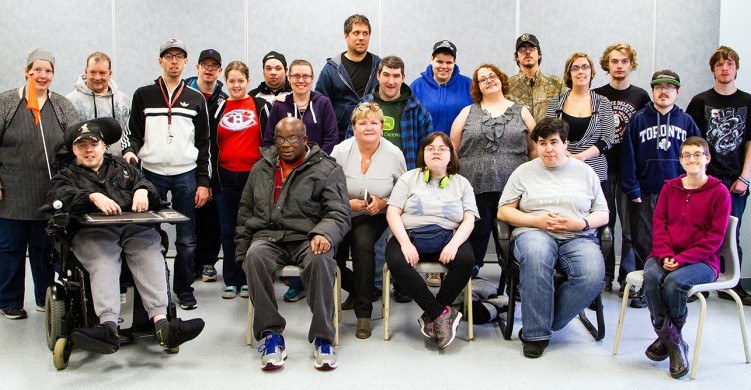
Summer Street Participant Council
What do you do to foster a positive and engaged team culture?
Bob: One of the ways is by ensuring that the people we support have a meaningful role in hiring and evaluating staff. When someone is interested in working with us, they’re referred to an interview committee made up of two participants and a manager.
If the interview goes well, participants may recommend offering a two-week contract. During that period, staff receive daily feedback from the participants they work with. It becomes an opportunity for both sides to learn about each other and determine whether the relationship is a good fit.
At the end of the two weeks, both the employee and the organization have had a chance to assess the fit. Most importantly, the participants themselves determine whether they would like to continue working with that person.
“This approach changes the power dynamic within the organization. Staff understand that the people they support have a voice and influence in decisions that affect them.”
That philosophy extends throughout our culture. Employees know that success is measured not only by job performance but also by the satisfaction of the participants they support.
We are a unionized organization, and our collective agreement recognizes client compatibility as a key factor. The expectation is that we find the best match between staff and participants, which helps create strong relationships and a culture built on responsiveness to the people we serve.
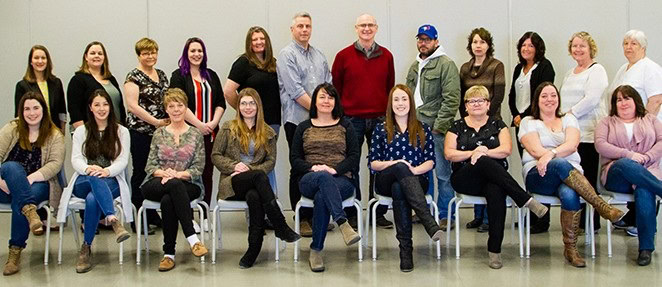
Summer Street team
What significant change is currently shaping your organization, and how are you navigating it?
Bob: The Nova Scotia Remedy Initiative has been one of the most significant developments in our sector in recent years. About four years ago, the Human Rights Commission found that Nova Scotia had been discriminatory for many years by requiring people with disabilities to live in institutions outside their communities or wait for services that others could access much more easily. As a result, the Remedy Initiative was established to address those historic inequities.
Philosophically, I believe it is a very positive step. One of the key changes is the move toward individualized funding, where supports are directed to the individual rather than the service provider. The individualized funding gives people with diverse abilities more choice and control over the services they receive.
“The challenge is not with the principle itself but with the practical realities of implementation. We are about three and a half years into the process, and there is still a significant gap between the policy vision and day-to-day practice.”
One lesson we have learned is the importance of listening to and being guided by the people we support. Some of our most successful initiatives have come directly from participants rather than from management, as with our hydroponic food-growing enterprise mentioned earlier.
If you could have coffee with any person, past or present, who would it be and what would you ask them?
Bob: One person who had a great influence on me, and with whom I would love to have another conversation, was a participant in our organization about 20 years ago. Changes in legislation at that time meant smoking was no longer permitted in buildings, so I decided that participants would not be allowed to smoke on our property.
One participant challenged that decision. He wasn’t arguing with the law itself. His point was that I had made the decision without consulting the people it affected. He told me that wasn’t right. At the time, I believed I was simply doing what was required, but his challenge made me pause and think.
I went back to my team and asked how we should respond. Eventually, we provided a small budget and staff support so participants could meet independently, discuss issues important to them, and bring recommendations back to the organization.
“What emerged from that process was something I never anticipated: a Participant Bill of Rights with 80 points across 11 categories. That document became transformative for our organization.”
It laid the foundation for many of the practices we still use today, including participant-led accountability, direct reporting to the Board, and a culture where people receiving services have a meaningful voice in decisions that affect them.
The participant who challenged me has since passed away, but I often think about him. If I could sit down and have coffee with him today, I would simply thank him and tell him how much he changed our organization.
What new initiatives, resources, or member benefits would you like CASE to explore in the future?
Bob: To be honest, I’m probably not the best person to answer that because I’m still discovering everything CASE has to offer. What I can say is that there is real value in promoting the resources and opportunities that already exist.
I think one of the challenges is that organizations can become focused on their own work and lose sight of what is available outside their immediate circle. That was certainly true for us. As the sector evolves, organizations are being encouraged to look more broadly, learn from others, and explore new approaches.
What I have seen from CASE so far has been very positive. The conference was worthwhile, and the training opportunities in areas such as job coaching and job development were of direct interest to our staff.
“Continued professional development, skill-building opportunities, and practical resources that help organizations strengthen employment outcomes are all valuable.”
Kateryna: Thanks, Bob. It’s great to hear that you found value in the conference and training opportunities. We’re excited that next year’s CASE Conference will be held in St. John’s, Newfoundland.
And speaking of connections, we’re piloting a member referral program for CASE members. If you introduce us to an organization that isn’t currently a member and they join CASE, both organizations will receive a $50 membership discount. It’s a simple way to help grow our professional network and encourage the kind of peer-to-peer connections and knowledge sharing you’ve been talking about.
Learn more about The Summer Street Society on their website.