
CASE Member Spotlight – Selections Career Support Services
CASE Member Spotlight
Selections Career Support Services
The Canadian Association for Supported Employment (CASE) is committed to facilitating inclusive employment in Canada for persons experiencing disability and who may have intersecting identities. Our work is guided by our values and the guiding principles of supported employment. This work also involves learning and promoting best practices in Canada and across the world with the shared goal of advancing supported employment.
Kateryna Zmytrovych, CASE Member Experience Coordinator, spoke with the following staff members at Selections Career Support Services:
- Angie Amaris, Executive Director
- Pablo Castro, Program Manager
- Shourya Vaidya, Employment Relations Coordinator
Question 1. Please introduce your organization.
Angie: Selections Career Support Services is a community-based not-for-profit organization that supports Albertans with barriers to employment and/or disabilities to enter the workforce. Our ultimate goal is long‑term employment, and we strongly believe that we’re contributing to Alberta’s overall economic growth and reducing unemployment rates.
We have been in this sector for over 48 years, and we serve individuals in Edmonton, Leduc, and surrounding areas. We have three locations, each with a resource centre equipped with computers, internet, printer, virtual reality equipment, and one‑on‑one support.
We provide career advice and career counselling, community connection and accessibility, workshops, exposure courses, employment support, action plan development, hands‑on experience, external certification, mental health support, multi‑interview practice, work simulations including virtual reality, over a year follow‑up support, and other services.
Our organization also supports employers through job carving and job customization, aligning roles with the strengths and circumstances of Albertans.
We have five programs in our organization:
- Promoting and Driving Diversity supports individuals with developmental disabilities exclusively
- Moving 4WRD supports individuals with disabilities and people facing personal employment barriers
- CRAFT supports women entering the construction sector, operating in the rural area of Leduc and Nisq
- GROW Program, our newest program, provides support to anyone facing employment barriers and includes wraparound services for clients not yet ready for employment, such as housing, mental health support, spirituality, transportation, childcare, and other barriers
- Get Ready in Trades supports youth with disabilities in the employment sector
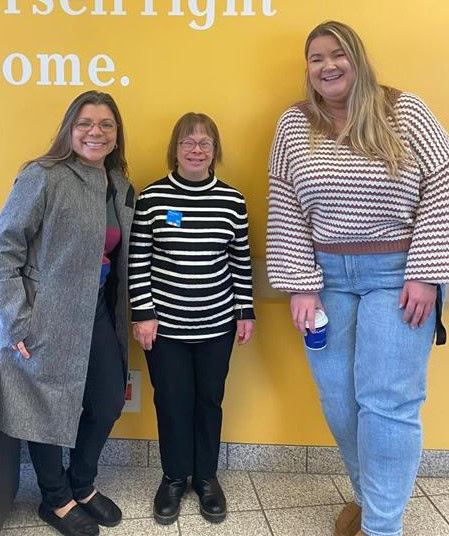
Photo above: Angie, Executive Director (left), with Michelle, a client (centre), and Lucy, a Career Development Specialist (right). Celebrating Michelle’s success of working at a bank for 9 years. (Credit: Selections)
We also host the Untapped Potential Conference that brings together over 150 employers and leaders in the sector, including human resource representatives, decision makers, not‑for‑profit organizations, and government representatives. It’s a high‑impact conference that promotes industry and community involvement and community capacity building to address labour market needs in the disability sector.
Kateryna: Speaking of the conference, by the way, have you ever attended the CASE conference?
Angie: We love your conference. We were very inspired by the powerful messages, the level of organization, and the depth of knowledge shared at the CASE conference. There were abundant resources, innovative approaches, and best practices that exceeded our expectations. The insight we gained led to tangible improvements in our work and strengthened our internal capacity.
It’s a conference where you can gather information and best practices that you can bring back to your province, to your city, and actually implement with your team. It’s a great trampoline to get to know what’s going on in employment in other provinces.
Last year, I made the commitment that I would bring my entire management team so they could experience the same level of learning, inspiration, and professional growth. Seven members of the management team at Selections attended the CASE conference.
Question 2. What is a “small but mighty” improvement your organization is proud of?
Pablo: We are very proud of the one‑on‑one support we provide to every individual we work with. We take the time to get to know each person, their strengths, interests, goals, and the challenges they might be facing.
This approach allows us to tailor job searches, provide personalized guidance, and work closely with employers to find the right fit. The impact is often seen in increased confidence, better job matches, and overall stronger long‑term success at work, which is what we always look for.
Shourya: With the one‑on‑one supports, as Pablo was mentioning, we are very focused on the individuals. We encourage this by creating an open communication environment for all stakeholders.
We see this reflected with people who enter our facilities as public guests, who are not necessarily formally in our programs. We are still able to provide them with resources they can use.
Angie: Our organization has a strong ability to adapt, adjust, and be flexible. Our industry is in constant change, and the employment practices that were acceptable 10 years ago are no longer relevant in this field. It’s in constant evolution.
Our organization has grown and adapted significantly to remain responsive and sustain our alignment with best practices, all while maintaining our commitment to high‑quality client services.
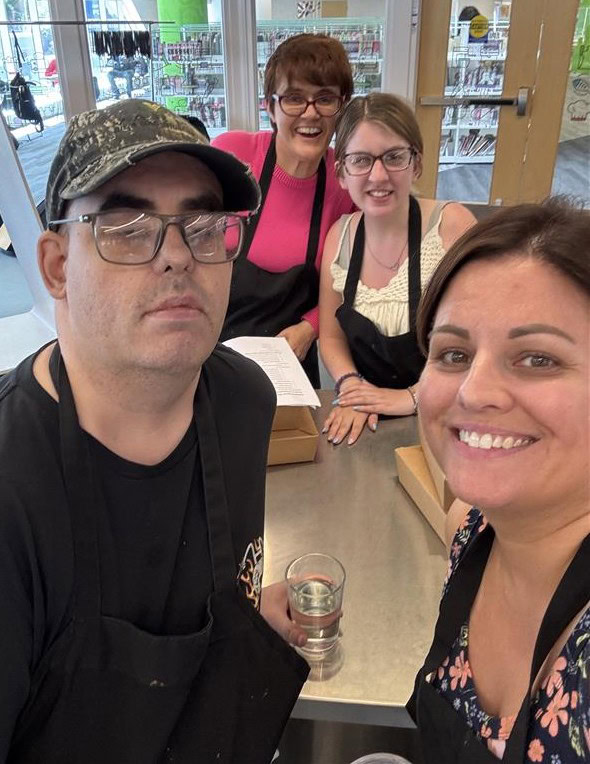
Photo above: Sam, a client (left front) and Chelsea, Career Development Specialist (right front), at a Culinary Crew activity to learn new cooking skills. (Credit: Selections)
Question 3. If you could strengthen one aspect of your organization’s work, what would it be and why?
Shourya: One thing I have noticed specifically from my experience is that we want to see more work exposure opportunities, especially in niche industries. Allowing individuals to explore industries that are more niche and tailored to their needs increases the likelihood of sustaining that employment.
By allowing individuals to express their needs in the workforce, we can encourage more involvement with niche industries. An example of that would be working with animals or graphic design, industries you don’t see as commonly, but I have seen interest in them from participants in our programs.
We want to tailor our communications with employers in those industries and, hopefully, gain more experience and provide more opportunities to individuals who are interested in those areas.
Question 4. What inspired your team to join CASE?
Angie: As I mentioned before, it is a really well‑organized and well‑put‑together conference, and having the opportunity to bring best practices, innovation, and connections and implement that into our work has been phenomenal.
In terms of feedback, I would say using the connections you are making in every province to promote this conference more widely could be very beneficial. I don’t think every service provider, speaking only for Alberta, is familiar with conferences like this. Enhancing the marketing and promotion so more people can attend would be helpful because, at the end of the day, all service providers are looking to serve more people and improve the quality of services and the quality of work.
Kateryna: It’s actually related to one idea we are currently working on developing: a referral program for our members, when if you, as a member, refer another organization to participate in the conference or become a member, both of you would receive some bonus.
I believe it reinforces your point that, alongside our communication and marketing strategies, we can incorporate a strong word‑of‑mouth element supported by members like yourself.
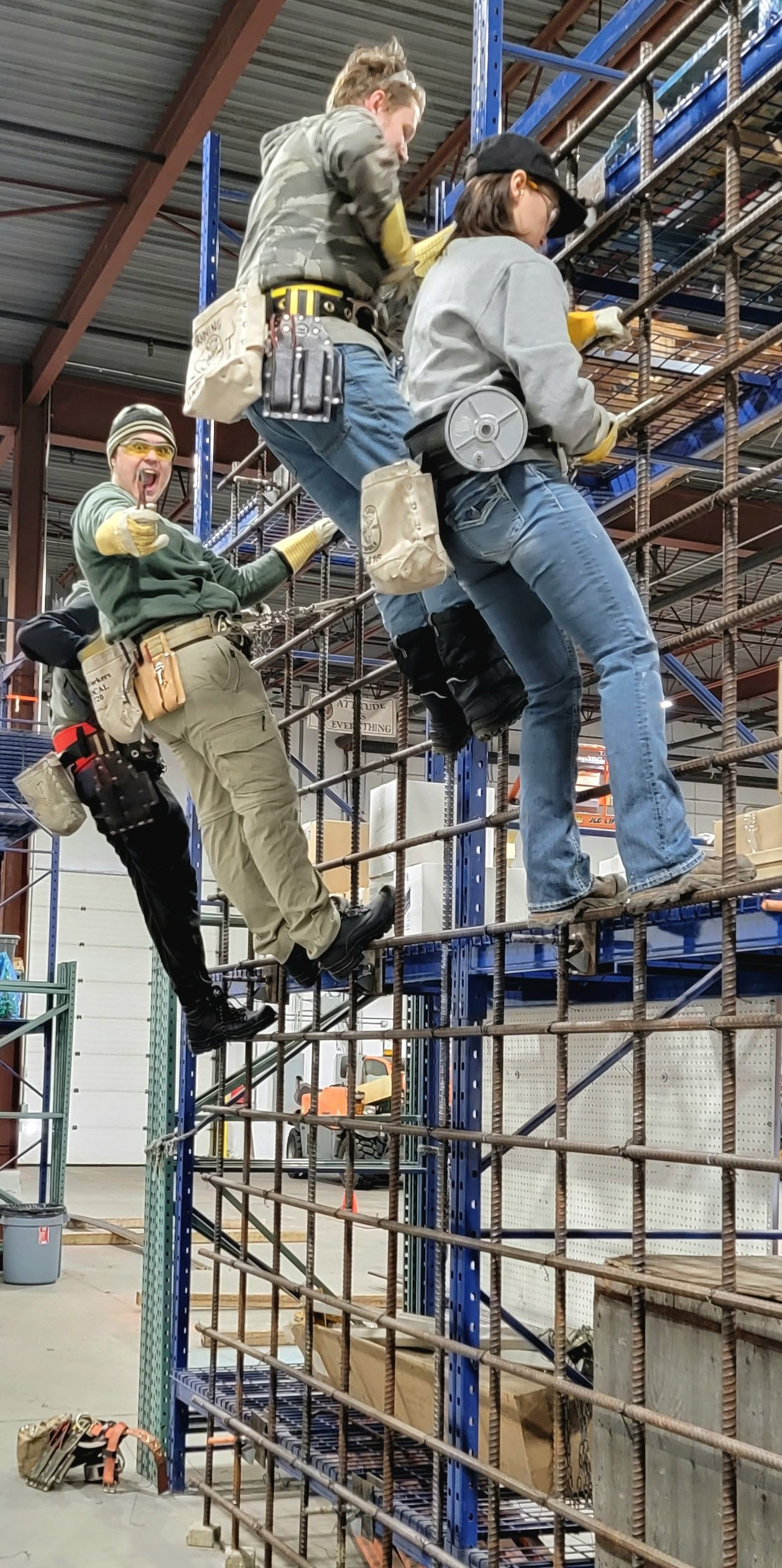
Photo above: GRiT program clients “hanging out” on scaffolding equipment during Iron Workers training, a demo at the Iron Workers Union. (Credit: Selections)
Question 5. What kind of impact does your organization hope to create in the next few years?
Angie: We will continue planting many seeds to contribute to Canada’s barrier‑free initiative. I learned about this plan back in 2024 at the CASE conference, and I think there is significant work ahead of us to support the barrier‑free initiative for 2040.
We need to continue influencing our province and our industry to help create systemic changes that remove barriers across various priority areas, including employment, transportation, and the built environment.
To achieve this goal, we must stand united as a sector, strengthening collaboration across the employment landscape, sharing best practices, and supporting one another as we create initiatives that elevate and advance our entire field. When we work collectively, we grow collectively.
Another key priority is increasing the number of employers who hire inclusively. This can only be achieved through expanding education, offering consistent support, collaborating, and promoting proven best practices that empower employers to confidently engage in inclusive hiring.
In terms of Selections, we are working very hard. We remain committed to becoming employers’ number one of choice for referral support and sustainable placements, setting a standard of excellence that employers trust and rely on.
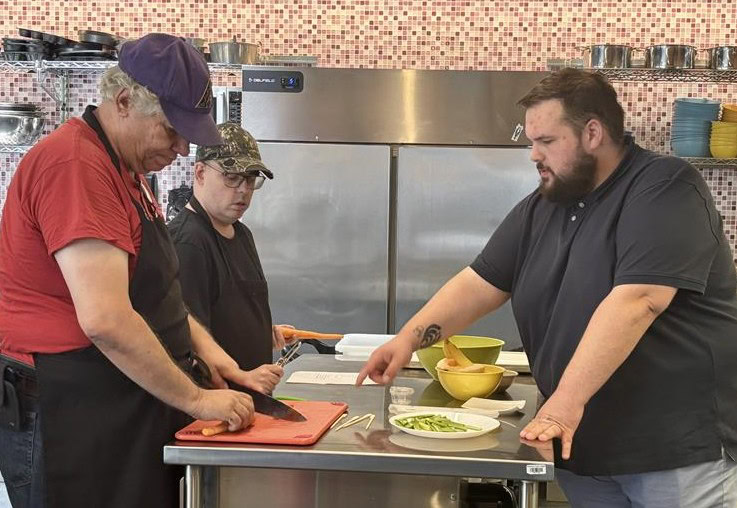
Photo above: Darril and Sam, clients (left), and Levi, Job Development Specialist (right), during a Culinary Crew activity to learn new cooking skills. (Credit: Selections)
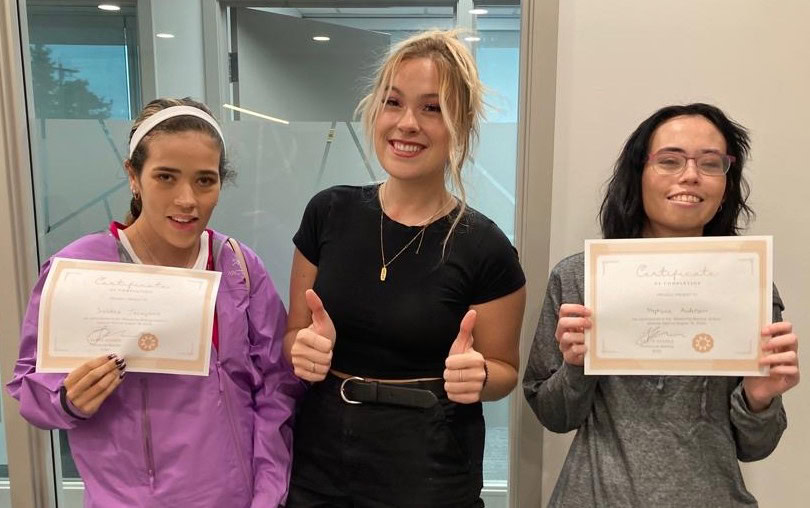
Photo above: An instructor (middle) with Promoting and Driving Diversity and GRiT clients (left and right) holding their new certifications for employment readiness. (Credit: Selections)
Question 6. What is a hobby or talent you have that might surprise your colleagues?
Shourya: I enjoy making music. I do a lot of music production on the weekends. I work with local artists within the city and help them make their music.
Pablo: I love photography. I’m not an expert, and I didn’t go to school for it, but it’s a personal interest. Now I’ve kind of become the unofficial, designated event photographer for Selections. I think it’s super funny because I haven’t trained in that, but people like my pictures, and that’s what I’ve been doing.
Angie: My hobbies are not a surprise: I consider myself a great dancer and a good cook. The thing my team don’t know is that I am very crazy about soccer. I don’t play soccer, but I have a lot of passion for it. I think I’m the number one fan of my national team, Colombia.
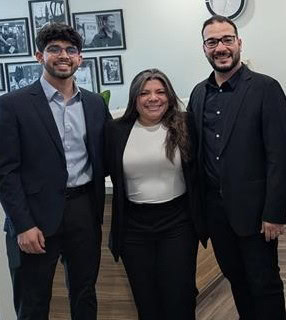
Photo on the right: Selections staff – Shourya Vaidya – Employer Relations Coordinator (left), Angie Amaris – Executive Director (middle), and Pablo Castro – Program Manager (right). (Credit: Selections)
Visit the Selections Career Support Services website to learn more about their work.