Mentorship offers organizations the opportunity to expand connections. So often we hear it’s not what you know, but who you know. This is commonly associated with the talent community’s search for employment. As the workforce demographics shift, so does the positioning of organizations seeking talent. Organizations must now fully participate in the social networking environment to ensure they are more than known, that they are valued as employers of choice.
Inclusion, diversity and workplace equity efforts require a holistic approach to ensure your processes, policies and culture are team-focused. In order to align them, you must have a clear view of who occupies your spaces. Evaluating team demographics can ensure that you are implementing processes and policies that have the fewest barriers and are universally supported.
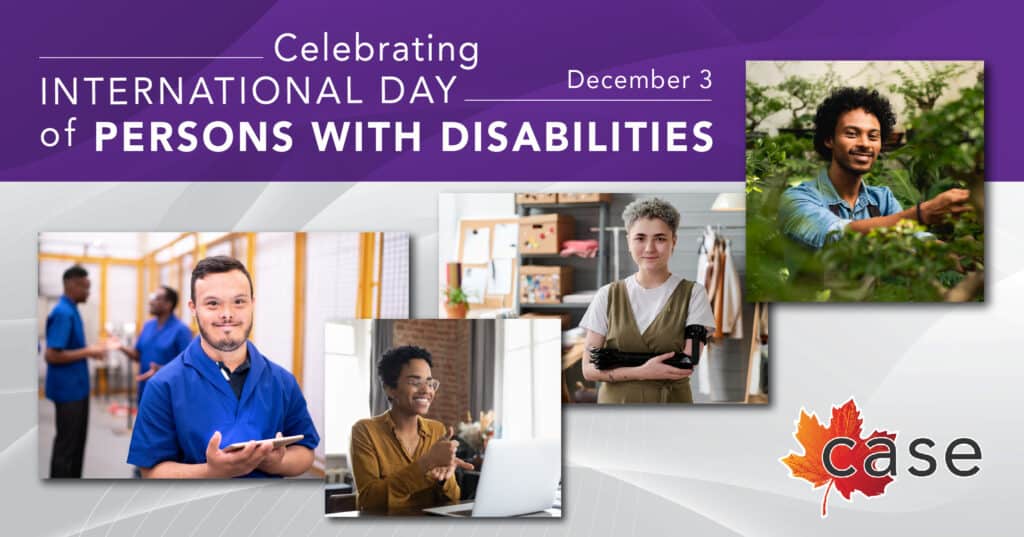
CASE celebrates International Day of Persons with Disabilities. Today is International Day of Persons with Disabilities (IDPWD), a day to recognize and celebrate the contributions made by people experiencing disabilities. IDPWD was declared by the United Nations General Assembly in 1992. For the past 30 years, has been a day to focus our collective energies to advance the rights and well-being of the 1 billion citizens experiencing disability around the world, and to acknowledge and dismantle the barriers they continue to face. As we celebrate this day, CASE staff and board members renew our commitment to empowering supported employment service providers, employers, self-advocates, and community allies to create inclusive workplaces for all.

The Canadian Association for Supported Employment (CASE) has partnered with Fit First® Technologies to assess, train, and link persons with disabilities to employers, and to enhance the way they participate in the workforce. Funded by the Government of Canada’s Sectoral Initiative Program (SIP), the CASE Innovation Lab Project supports partnerships with organizations like Fit First to develop and implement sector-based solutions to address workforce challenges.

The Canadian Association for Supported Employment (CASE) has partnered with Fit First® Technologies to assess, train, and link persons with disabilities to employers, and to enhance the way they participate in the workforce. Funded by the Government of Canada’s Sectoral Initiative Program (SIP), the CASE Innovation Lab Project supports partnerships with organizations like Fit First to develop and implement sector-based solutions to address workforce challenges.
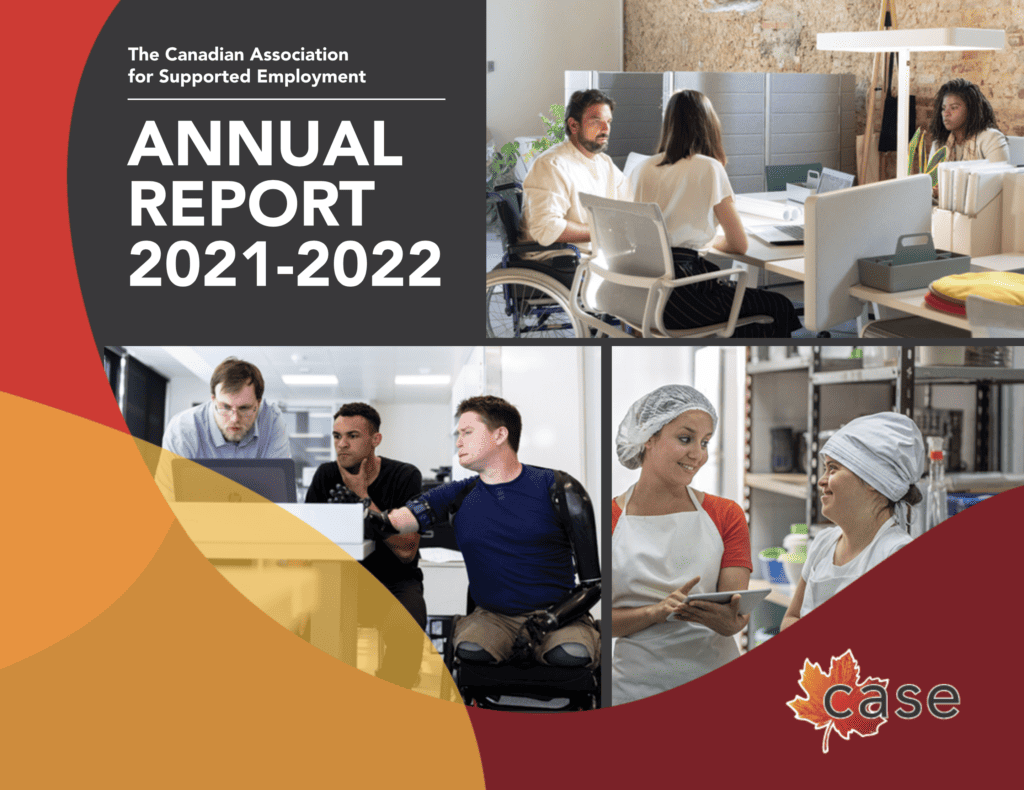
2021/2022 was an exciting and challenging year for CASE. Like the rest of our allies in the supported employment sector, we have been focused on increasing employment inclusion of people who experience disability in this new world of work.

Mark Wafer, disability rights activist and former owner of 14 successful Tim Hortons Restaurants shares his experience of building an inclusive workforce
Mentor Canada and the Canadian Association for Supported Employment (CASE) jointly released key findings from the Mapping the Mentoring Gap research initiative. The findings show that Canadian youth experiencing disabilities who had access to a formal or informal mentor while growing up reported better mental health, employment, and educational outcomes compared to those who did not have a mentor.
In November 2021, with funding from the Government of Canada’s Workplace Opportunities: Removing Barriers to Equity program, CASE launched a study titled Diversity Works, to explore the unique challenges faced by Black, Indigenous, and people of colour experiencing disability as they navigated various stages of the employment journey with the assistance of supported employment service providers…

CASE Diversity Works is thrilled to announce two new learning opportunities that are sure to excite and inspire you, while giving you the tools to enhance existing supports for job seekers who experience disability and identify as Black, Indigenous, or Persons of Colour (BIPOC).