
Finding Your Path: A Career Mentoring Guide for Indigenous Youth with Disabilities
Finding Your Path
A Career Mentoring Guide for Indigenous Youth with Disabilities
Co-created with Mentor Canada and Indigenous experts from across Canada, this new guide supports First Nations, Inuit, and Métis youth with disabilities in navigating mentorship in ways that honour their identities, cultures, and lived experiences.
To read this post in French, click here. | Pour lire cet article en français, cliquez ici.

Indigenous Peoples are one of the fastest-growing populations in Canada, with 40 per cent being under the age of 25. Indigenous youth are up-and-coming workers, entrepreneurs, and leaders across the country (Indigenous Services Canada, 2023).
According to the 2022 Indigenous Peoples Survey, almost one third (30.6%) of Indigenous people in Canada over the age of 15 experience disability and almost 31% experience mental health challenges (Statistics Canada, 2025).
Mentorship for Indigenous youth experiencing disability
A review of studies on Indigenous youth and resilience found that successful resilience strategies included self-esteem, optimism, positive cultural identity, belonging, accomplishment, and self-reliance (Heid et al, 2022). Taking part in mentoring experiences can heighten these points of resilience for Indigenous youth.
Mentorship can help Indigenous youth thrive and succeed in the workplace, especially when entering the workforce. Mentorship is especially empowering when it includes Elders, culturally sensitive support programs, and support for cultural and traditional activities (Signal49 Research, 2019).
Mentoring can be important to the success of an Indigenous job seeker, worker, or entrepreneur experiencing disability, especially with a mentor who is Indigenous, who experiences disability, or who shares a common interest (Community Futures Treaty 7, 2025).
About Finding Your Path
Many Indigenous youth, including Indigenous youth who experience disability, would like a career mentor but may not have access to one. This new career mentoring guide for Indigenous youth can help to close that gap by outlining Indigenous perspectives on mentoring and how to find and connect with career mentors.
Developed by Mentor Canada in partnership with MentorAbility Canada, the framework was informed by a team of 10 experts from across Canada, most of whom are Indigenous and some who experience disability, and by research-based evidence. The guide is beautifully illustrated throughout by Indigenous artist Elena Sterritt, a Gitxsan artist from Gitanmaax First Nations. This document is funded in part by the Government of Canada’s Opportunities Fund for Persons with Disabilities.
Every person carries unique experiences, strengths, and needs. This new career mentoring guide is designed to be a place where Indigenous youth can celebrate all that they are, while finding mentors to support them moving forward.
This guide was made for First Nations, Inuit, and Métis youth across Turtle Island. Each Nation and community has its own teachings, stories, language, and practices. Youth are advised to “Use what fits your life. Leave what doesn’t.”
Grounded in Indigenous frameworks
Five Indigenous frameworks or tools are presented that can help youth navigate the mentoring guide, as needed. Throughout their process, they can ask, “What fits for me? What doesn’t?”
The five frameworks included in the guide are:
- The Medicine Wheel
- The Four R’s
- The Circle of Courage
- IQ values or Inuit Gaujimajatuqangit principles
- Seven Grandfather Teachings
How the guide prepares Indigenous youth
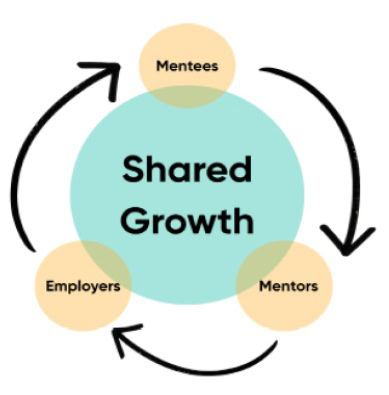
Finding Your Path explains what career mentoring is, the types of mentoring, and how mentorship can be beneficial for mentees, mentors, and employers. It lists what youth can do with a mentor and provides examples of mentorships.
Career mentors can come from all walks of life. Each youth decides who they want as a mentor and whether they prefer a mentor who shares their identity or who has different experiences.
Five elements are outlined that help you know whether someone is a good mentor who truly supports your journey:
- Relational and holistic
- Strength-based and identity-affirming
- Focused on you
- Has goals – and you can see progress
- Reciprocal
Indigenous perspectives on mentoring and disability
Guiding and teaching have always existed within First Nations, Métis, and Inuit families and communities. Ten teachings are presented that make mentoring strong in Indigenous communities and that can be a starting point for career mentorship.
Youth are invited to think about how teachings show up in their community or family. What teachings do they connect with on a personal level? Which are most helpful in relation to school, work, or their career?
Through questions, youth are invited to reflect on their own disability story to understand it and how it guides their future.
Indigenous communities all view disability in their own ways, but some share common teachings, like “Everyone belongs”, “Everyone has gifts,” and “Everyone contributes.”
Four other key teachings can help us understand Indigenous perspectives of disability and inclusion:
- Disability is a gift from the Creator.
- Disability is a source of strength, ability, and contribution.
- Disability is a colonial concept.
- Disability is a natural part of human diversity.
Finding and building strong mentoring relationships
One section of the guide is dedicated to finding career mentors and building strong, respectful connections with them. It highlights six different types of “capital” that people and mentors can carry, which means the type of strengths, knowledge, skills, relationships, and support they offer.
It outlines how to:
- move forward in a good way with a mentor
- contact potential mentors and examples of mentoring requests
- structure a mentoring conversation
- end a mentoring experience in a good way
Passing your teachings along is also encouraged with four ways to transition from mentee to mentor.

Overall, this career mentoring guide for Indigenous youth does not single out one “right way” to take part in a mentoring relationship or to build a career. Rather, it advises: “Take what you need from this guide, return to it when useful, and trust yourself to move forward in ways that feel right for you.”
Access Finding Your Path on the Canadian Association for Supported Employment website.
References
Community Futures Treaty Seven, funded by Canadian Association for Supported Employment. Indigenous Experience with Disability and Employment. March 2025.
Heid O, et al. Indigenous Youth and Resilience in Canada and the USA: a Scoping Review. Advers Resil Sci. 2022;3(2):113-147. doi: 10.1007/s42844-022-00060-2. Epub 2022 May 23. PMID: 35733443; PMCID: PMC9206629.
Indigenous Services Canada. An update on the socio-economic gaps between Indigenous Peoples and the non-Indigenous population in Canada: Highlights from the 2021 Census. October 25, 2023. Accessed November 6, 2026.
Signal49 Research. Working Together. Indigenous Recruitment and Retention in Remote Canada. 2019.
Statistics Canada. Indigenous Peoples Survey: Public Use Microdata File. Released May 30, 2025. Accessed November 4, 2026.
It’s important to note that the Indigenous Peoples Survey includes First Nations living off reserve, Métis, and Inuit but does not include First Nations people on reserve. In 2021, among First Nations people with Registered or Treaty Indian status, 40.6% were living on reserve (Statistics Canada, 2022).